 The Richard E. Bellman Control Heritage Award The Richard E. Bellman Control Heritage Award
The award is given for distinguished career contributions to the theory or applications of automatic control. The Bellman Control Heritage Award is the highest recognition of professional achievement for U.S. control systems engineers and scientists. Richard E. Bellman, for whom the award is named, was an applied mathematician who pioneered the development of system theory as an academic discipline in the 1950s and 1960s. His accomplishments are described in IEEE Transactions on Automatic Control, 1984. The Bellman Award is unique among the AACC awards in that it is made for lifetime contributions to control and systems engineering. Such contributions may cover a range of technical areas or may have been put into practice in several different fields. The winner of the Bellman Award usually has been involved with the interaction of control or system theory with other scientific disciplines, with the engineering profession, and/or with the implications of controls for society at large.

Prof. Ed Kamen receiving the Bellman Award on behalf of Prof. Kalman from Prof. Cruz, AACC Awards Chair
Awarded to Rudolf E. Kalman for fundamental contributions to control and system theory.
One of the most influential and dominant figures in system theory over the past 4 decades has undoubtedly been Rudolf E. Kalman.
He was born in Budapest, Hungary, on May 19, 1930. He received the bachelor's degree (S.B.) and the masterís degree (S.M.) in electrical engineering, from the Massachusetts Institute of Technology in 1953 and 1954, respectively. He received the doctorate degree (D.Sci.) from Columbia University in 1957. His major positions include that of Research Mathematician at the Research Institute for Advanced Study in Baltimore, 1958-1964; Professor at Stanford University 1964-1971; Graduate Research Professor at the Center for Mathematical System Theory, University of Florida, Gainesville 1971-1993. Moreover, since 1973 he has also held the chair for Mathematical System Theory at the ETH (Swiss Federal Institute of Technology) Zurich.
He is the recipient of numerous awards, including the IEEE Medal of Honor (1974), the IEEE Centennial Medal (1984), the Kyoto Prize in High Technology from the Inamori foundation, Japan (1985), the Steele Prize of the American Mathematical Society (1987). He is a member of the U.S. National Academy of Science, the U.S. National Academy of Engineering, a foreign member of the Hungarian and French Academies of Science, and has received a number of honorary doctorates. Kalman's first major contribution was the introduction of the self-tuning regulator in adaptive control. Between 1959 and 1964 Kalman wrote a series of seminal papers. First, the new approach to the filtering problem, known today as Kalman Filtering was put forward. In the meantime, the all pervasive concept of controllability and its dual, the concept of observability, were formulated. By combining the filtering and the control ideas, the first systematic theory for control synthesis, known today as the Linear-Quadratic-Gaussian or LQG theory, resulted. The next contribution was the solution of the black box modelling problem in the linear case, known as realization theory. This problem involves the construction of the state from input/output measurements. The next milestone in the sequence of contributions was the introduction of module theory to the study of linear systems.
Over the past 15 years Kalman has devoted his efforts to the understanding of the problem of identification from noisy data with particular attention to the connections with econometrics, statistics and probability theory.
The Donald P. Eckman AwardThe Donald P. Eckman Award was the first award established by the American Automatic Control Council. It was established in memory of Donald P. Eckman, who made important contributions to control theory and practice in the 1950s and 1960s but died tragically in an automobile accident in 1962. The purpose of this award is to recognize, particularly, important contributions to the control field made by younger researchers. The age limit for the award was originally set at 30 years, but was later extended to 35 years of age (at the time of the award) as the control field grew and matured, in recognition of the difficulty of making leading edge contributions to a more mature field. While the Eckman Award is given for key contributions made prior to the age of 35, the recipient is normally expected to be the type of individual who will remain a leader in the controls profession; he is an example to be emulated by engineers entering the profession.
The Eckman award is often given for key contributions to a single field of research, based on the discovery of a new phenomenon or design method or scientific principle. In practice, the award has usually been given to individuals who make theoretical contributions which have practical implications. However, the development of devices (e.g., as reflected by patents), or significant contributions to engineering practice, might also be recognized.
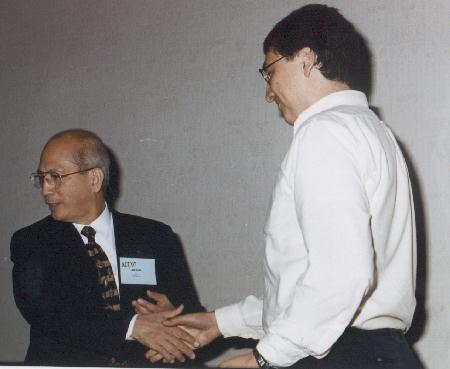
Prof. Murray receiving the Eckman Award from Prof. Cruz, AACC Awards Chair
Awarded to Richard M. Murray for contributions to the theory of nonlinear dynamics and control of mechanical and fluid systems, with applications to nonholonomic systems, robotic manipulation and locomotion, aerospace vehicles, and compressor systems.
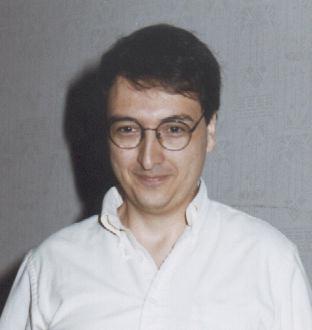
Richard M. Murray received the B.S. degree in Electrical Engineering from California Institute of Technology in 1985 and the M.S. and Ph.D. degrees in Electrical Engineering from the University of California, Berkeley, in 1988 and 1991, respectively. He held a postdoctoral appointment at University of California, Berkeley, in 1991 and is currently an Assistant Professor of Mechanical Engineering at the California Institute of Technology, Pasadena. His research interests include nonlinear control of mechanical systems with applications to aerospace vehicle and robotic locomotion, active control of fluids with applications to propulsion systems, and nonlinear dynamical systems theory.
Professor Murray received the Eliahu Jury Systems Research Award for his thesis work at UC Berkeley, and is a recipient of the Richard P. Feynman-Hughes Fellowship for Young Faculty at Caltech, an NSF CAREER Award, and an ONR Young Investigator Award.
The AACC Education AwardThe AACC Education Award is given for outstanding contributions to Control Education in any form. These contributions can be from any source and in any media, i.e., electronic, publications, courses, etc. Due to the large number of well qualified nominees, this award is often one of the most difficult to assign.
In evaluating a nominee for the Education Award, it is common for the Award Committee to seek evidence beyond what is provided in the nomination, such as searching the Citation Index, or considering the leadership positions assumed by graduate students, or evaluating key research results of former graduate students. Education is viewed as a process which extends beyond the classroom or the advising functions of a particular faculty member. The Education Award has normally gone to university professors, but there is no formal requirement that nominees must be university professors. Accomplishments of former students may be considered in making the award.
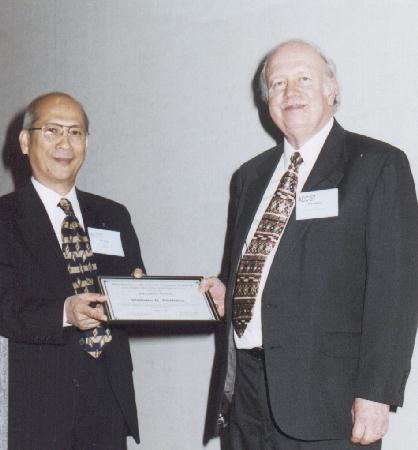
Prof. Perkins receiving the Education Award from Prof. Cruz, AACC Awards Chair
Awarded to William R. Perkins for his contributions to automatic control education; transferring the wonder and excitement of discovery, as superior instructor, dedicated advisor and model educational leader.
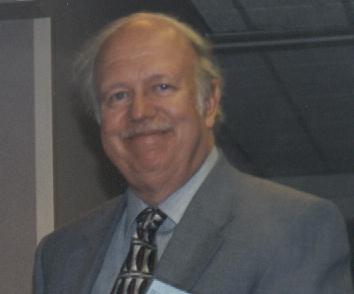
William R. Perkins is a Professor of Electrical and Computer Engineering and a Research Professor in the Coordinated Science Laboratory at the University of Illinois, Urbana-Champaign. He received the A.B. degree in Engineering and Applied Physics from Harvard University, and the M.S. and Ph.D. degrees in Electrical Engineering from Stanford University.
He was an Associate in the Center for Advanced Study, University of Illinois, in 1986. He received the
Halliburton Education Leadership Award of the University of Illinois College of Engineering in 1986-87. He
is a Life Fellow of the Institute of Electrical and Electronics Engineers (IEEE). He received an IEEE
Centennial Medal in 1984, and is a Distinguished Member of the IEEE Control Systems Society. He has
served the IEEE in many capacities, including President of the IEEE Control Systems Society in 1985
and
Editor-in-Chief of the IEEE Press in 1992-4. He is President of the American Automatic Control Council
(1996-7). He is coauthor of the textbook, Engineering of Dynamic Systems, (Wiley).